Unpacking the High Cost of Walnut Slab Doors in 2025
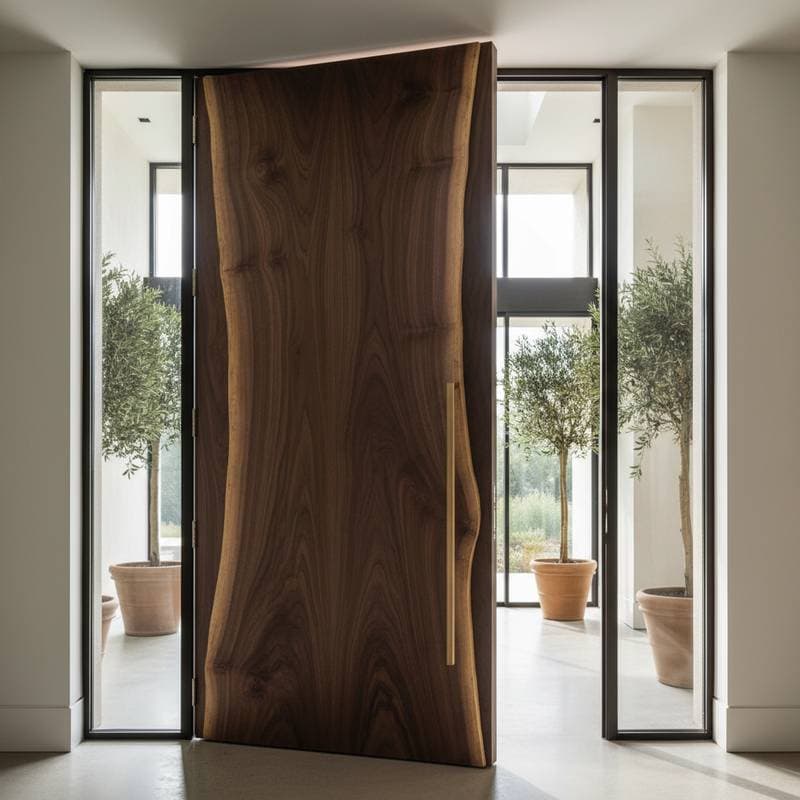
Live edge walnut slab doors draw the eye with their distinctive grain, rich tones, and irregular outlines that echo the tree's original form. Homeowners often encounter sticker shock upon learning that one such door starts at over eight thousand dollars. This price stems from more than upscale appeal; it encompasses rare materials, meticulous workmanship, and the inherent value of a custom piece that functions as both entryway and artwork.
To grasp the pricing, examine the journey from raw log to installed door. Each phase contributes to the expense while ensuring superior quality and durability that standard doors cannot match.
Harvesting and Processing Walnut into Slabs
Selecting a walnut tree for slabs demands expertise, as only mature specimens yield wide, stable sections. After felling, the log undergoes precise milling to retain the live edge and optimize usable width, often using bandsaw mills to minimize waste and defects.
Drying follows, with slabs placed in kilns for four to eight weeks at controlled temperatures below 140 degrees Fahrenheit. This gradual process prevents cracks and warping, though it elevates costs through extended facility use and monitoring.
Final preparation includes surfacing the slab on CNC machines for flatness within one-sixteenth of an inch, followed by stabilization. Technicians address checks or voids with epoxy fills or metal bowties, preserving the wood's character while enhancing strength for door applications.
These steps yield slabs that resist movement over decades, but the irregular shapes require carpenters to adapt joinery and fittings uniquely, extending fabrication time by 20 to 50 percent compared to rectangular panels.
Walnut Slab Doors Versus Alternative Materials
Comparing options reveals why walnut slabs command a premium. Consider the breakdown in the table below, which contrasts initial investment, longevity, upkeep, and ideal settings.
| Material Option | Starting Cost | Expected Lifespan | Maintenance Level | Ideal Application |
|---|---|---|---|---|
| Hollow Core Composite | $200–$600 | 10–20 years | Low | Rental properties or basic rooms |
| Solid Oak Panel | $1,000–$2,500 | 30–50 years | Moderate | Classic or family homes |
| Engineered Walnut Veneer | $2,000–$4,000 | 25–40 years | Moderate | Contemporary spaces on a budget |
| Live Edge Walnut Slab | $8,000+ | 50+ years | Moderate to High | Statement pieces in luxury designs |
Walnut slabs outperform in artistry and endurance, transforming a simple passage into a focal point. Their one-of-a-kind patterns and heft provide a tactile connection to nature that mass-produced alternatives lack.
Navigating Installation Challenges
Weighing 100 to 200 pounds or more, a walnut slab door necessitates robust support beyond typical jambs. Reinforce the rough opening with doubled king studs and a heavier header to distribute load evenly and prevent sagging.
Experienced installers begin with a site survey, measuring plumb and level to tolerances of one-eighth inch. They select heavy-duty hardware, such as ball-bearing hinges rated for 150 pounds per pair or pivot mechanisms for wider slabs up to 48 inches.
Positioning involves hydraulic lifts to avoid stressing the wood, followed by shimming for plumb operation. Technicians then fine-tune reveals to one-quarter inch uniformity, ensuring the door swings freely without binding.
Sealing completes the job, with oil-based finishes applied to edges and multiple coats of polyurethane on surfaces to repel humidity fluctuations. This phase alone can add 10 to 15 hours of labor, justifying the elevated installation fees of $1,500 to $3,000.
Factors Fueling Price Increases
Several market forces amplify walnut slab door costs in 2025. Premium logs, sourced from sustainably managed U.S. forests, face shortages as exports to Europe rise 15 percent annually, driving up raw material prices by 20 to 30 percent.
Artisan shortages compound this; only specialized mills and fabricators handle live edge work, with labor rates reaching $75 to $125 per hour for master craftsmen. Their skills in bookmatching grains or integrating hardware seamlessly add significant value.
Biophilic design trends boost demand, as architects specify organic elements for wellness-focused homes. Custom requests, like inlaid LED lighting or tempered glass inserts, further inflate expenses by 25 percent or more.
Logistics play a role too: transporting a 10-foot slab demands custom pallets, temperature-regulated trucks, and full-value insurance, tacking on $500 to $1,500 in fees. These elements collectively position walnut slabs as elite choices in a competitive market.
Evaluating Suitability for Your Space
Determine if a walnut slab door aligns with your needs by assessing style compatibility first. Pair its fluid lines with minimalist or rustic interiors; in formal settings, opt for cleaner profiles to avoid visual clutter.
Consider practicalities: for exterior use, select thicker slabs with weather-resistant finishes to withstand temperature swings. Interior applications benefit from lighter pivots if space constraints limit swing radius.
Weigh upkeep: walnut requires annual oiling to maintain luster, unlike veneers that wipe clean. Budget-wise, allocate funds holistically—pairing the door with matching trim maximizes impact without excess spending.
Project your future: these doors suit long-term residences, as refinishing every 10 years preserves their patina. If frequent changes are likely, explore reversible engineered options instead.
Steps to Source and Install Successfully
Initiate your project with precise dimensions, accounting for a one-inch reveal on all sides. Consult fabricators for slab previews, noting how UV exposure darkens the wood over time.
Secure commitments on timelines early—sourcing may span three months, fabrication another four to six weeks. Coordinate with structural engineers if modifying load-bearing walls.
Budget for contingencies like custom hardware prototypes, which ensure fit before final assembly. This preparation minimizes delays and secures a seamless integration.
Realizing Lasting Value from Walnut Slabs
A walnut slab door delivers more than passage; it infuses spaces with organic warmth and heirloom quality. The investment pays dividends through enhanced property appeal and daily enjoyment of its evolving character.
Proper selection and care transform it into a cornerstone of personalized design, blending functionality with the quiet elegance of natural materials.